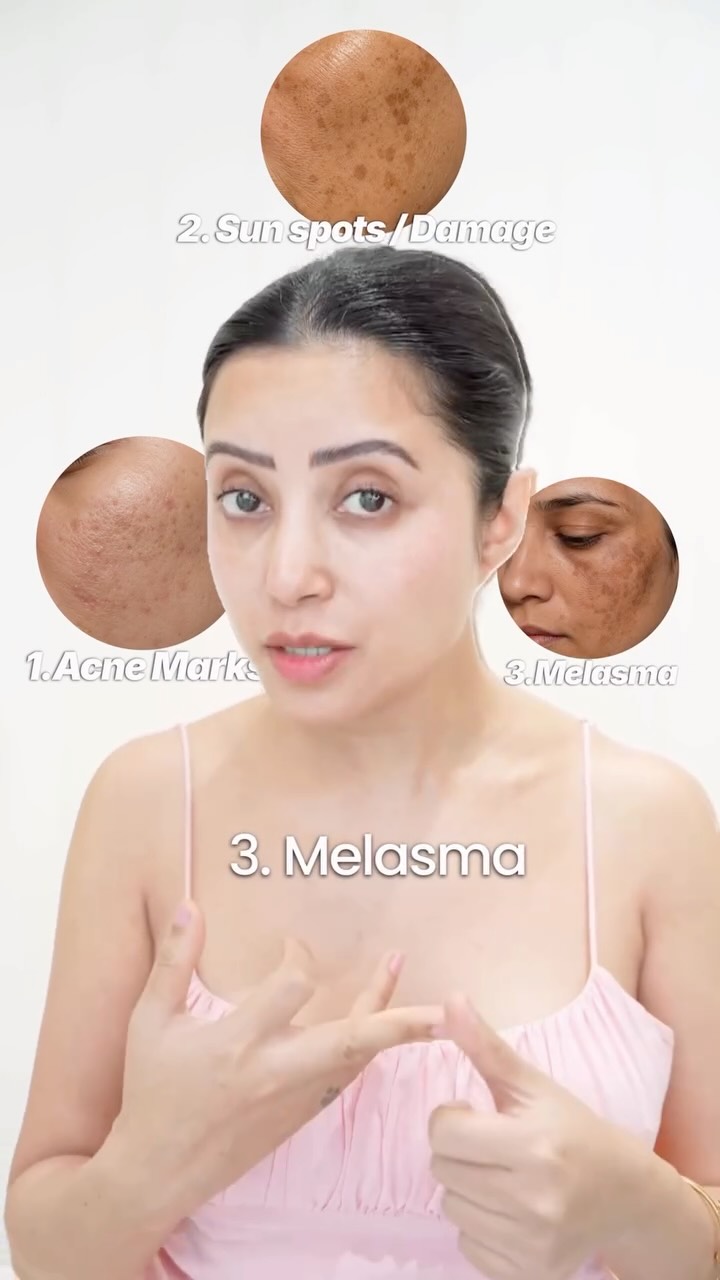
Most people don’t have a pigmentation problem. They have a pigmentation + trigger problem. That’s why many dark spots fade, return, fade again, and return again. Before choosing ingredients, it’s important to understand what kind of pigmentation you’re dealing with. Acne marks (PIH), sun spots, and melasma don’t behave the same way, so they shouldn’t always be approached the same way. The good news? Pigmentation is often more predictable than people think. Once you identify the trigger and stop feeding it, your skincare routine starts making a lot more sense. In the next episode, we’ll talk about why one ingredient alone is usually not enough to tackle pigmentation. Disclaimer: This content is based on personal research and understanding of skincare science and is intended for educational purposes only. It is not medical advice or a substitute for consultation with a dermatologist. (pigmentation, hyperpigmentation, acne marks, PIH, post inflammatory hyperpigmentation, melasma, sun spots, dark spots, uneven skin tone, tranexamic acid, niacinamide, alpha arbutin, vitamin c, skincare education, skin and more, pigmentation routine, pigmentation treatment, sunscreen for pigmentation, melanin, skin barrier)
 9.7K
9.7K  107
107 This post was published on 29th May, 2026 by Debashree on her Instagram handle "@debashreebiswas (Debashri Bisswas🧿)". Debashree has total 996.4K followers on Instagram and has a total of 2.9K post.This post has received 9.7K Likes which are lower than the average likes that Debashree gets. Debashree receives an average engagement rate of 2.32% per post on Instagram. This post has received 107 comments which are lower than the average comments that Debashree gets. Overall the engagement rate for this post was lower than the average for the profile.
5.3K 7  09-06-2026 18.0K 198 07-06-2026 21.0K 67 06-06-2026 7.9K 12 05-06-2026 46.0K 136 03-06-2026 42 5 02-06-2026 16.0K 180 01-06-2026 56.3K 42 28-05-2026 74.4K 249 26-05-2026 16.0K 149 26-05-2026 3.2K 148 23-05-2026 32.7K 147 22-05-2026 18.0K 235 19-05-2026 70.3K 294 15-05-2026 7.0K 115 14-05-2026 26.1K 109 11-05-2026 16.7K 147 08-05-2026 22.2K 137 07-05-2026 64.6K 209 06-05-2026 7.6K 159 05-05-2026 38.7K 129 04-05-2026 21.2K 91 03-05-2026 6.0K 138 02-05-2026 7.1K 135 30-04-2026 51 3 28-04-2026 23.0K 139 28-04-2026 20.5K 153 27-04-2026 28.4K 154 26-04-2026 6.1K 122 24-04-2026 96.8K 345 22-04-2026 19.1K 90 22-04-2026 30.6K 235 20-04-2026 12.2K 155 19-04-2026 96.5K 128 18-04-2026 11.5K 113 16-04-2026 239 6 15-04-2026 2.8K 36 14-04-2026 9.6K 81 13-04-2026 15.8K 124 12-04-2026 14.0K 123 11-04-2026 43.6K 85 10-04-2026 76.0K 120 09-04-2026 4.2K 12 08-04-2026 21.2K 135 07-04-2026 106.9K 295 06-04-2026 24.9K 43 04-04-2026 8.7K 159 02-04-2026 4.8K 192 31-03-2026 5.1K 103 30-03-2026 8.8K 80 27-03-2026 21.7K 113 27-03-2026 15.1K 205 24-03-2026 34.1K 116 24-03-2026 12.2K 89 21-03-2026 20.7K 145 26-02-2026 8.4K 187 01-02-2026 60.6K 182 29-08-2025 98.2K 312 17-08-2025 68.5K 241 21-07-2025