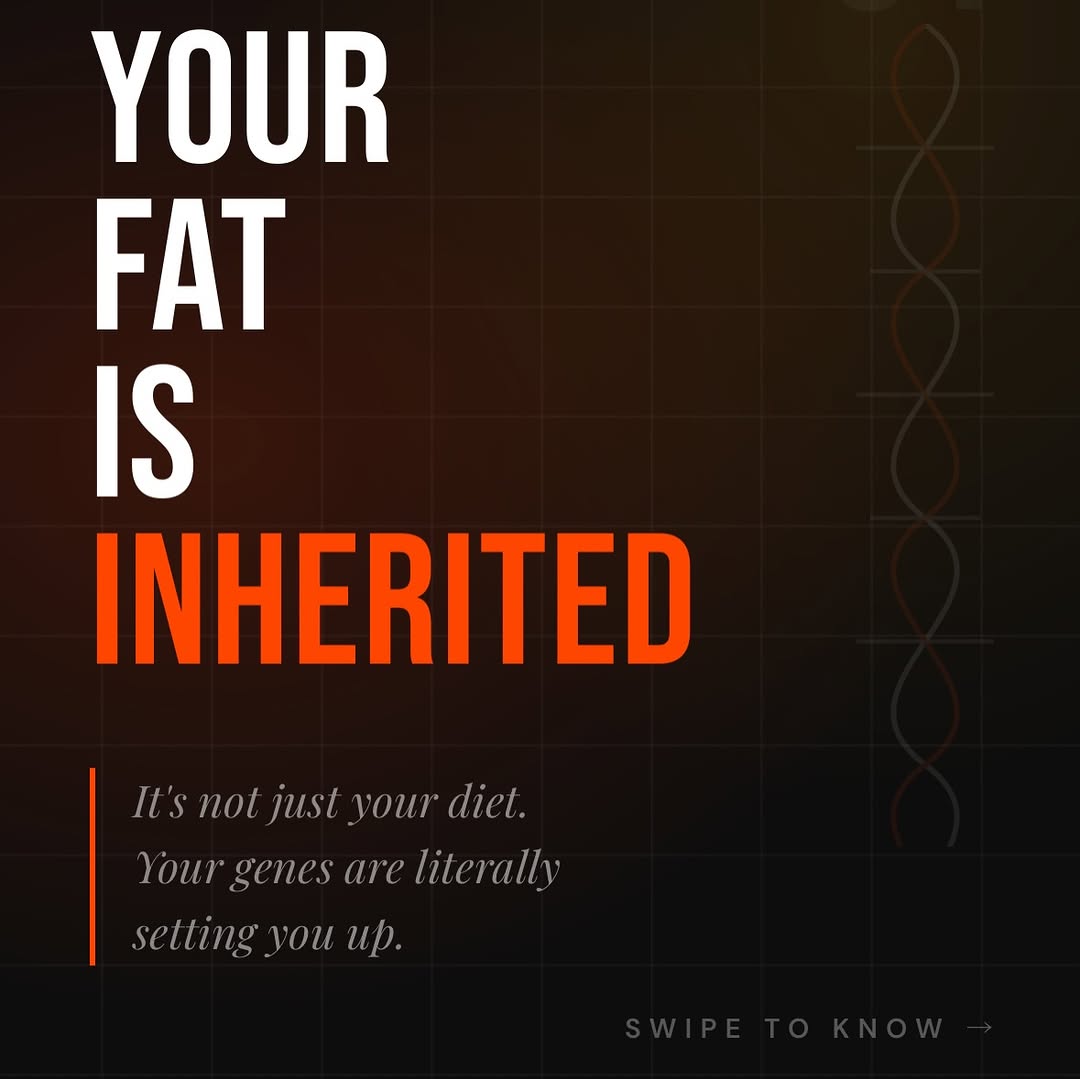
1. Genetic Predisposition (The Base Layer) Research shows 40–70% of obesity risk is heritable. * Variants in genes like FTO gene and MC4R gene influence: * Appetite (how hungry you feel) * Satiety (how full you feel) * Energy expenditure 👉 Example: People with certain FTO variants feel less full after meals, so they unconsciously eat more calories. 2. Hormonal Regulation (Brain–Body Axis) Body weight is tightly controlled by hormones: * Leptin → signals fullness * Ghrelin → stimulates hunger * Insulin → affects fat storage If a family has genetic resistance to leptin → brain doesn’t “see” fat stores → constant hunger + overeating. 3. Epigenetics (Inheritance Beyond DNA) This is where it gets interesting. * Parents’ lifestyle (diet, stress, obesity) can modify gene expression via Epigenetics * These changes can be passed to children 👉 Example: * Maternal obesity during pregnancy → child has higher risk of obesity * Mechanism: altered fetal metabolism + appetite regulation 4. Shared Environment (Silent Driver) Families share: * Food habits (high-calorie, low-fiber diets) * Activity levels (sedentary lifestyle) * Sleep patterns 👉 This often amplifies genetic risk. Twin studies show: * Same genes + different environments → weight differs * Same environment + different genes → still differences → So both matter, but environment activates genetic risk. 5. Gut Microbiome (Emerging Evidence) Families tend to have similar gut bacteria. * Certain microbiota extract more calories from the same food * Can influence fat storage and inflammation 👉 Studies show microbiome transfer can even induce obesity in animal models. 6. Set Point Theory (Body Defends Weight) Your body has a “weight set point” regulated by the hypothalamus. * If your family has higher baseline set points → body resists weight loss * When you diet: * Hunger increases * Metabolism slows 7. Behavior + Neurobiology Loop Dopamine reward pathways (food pleasure) can also be inherited. * High sugar/fat foods → stronger reward response * Leads to habitual overeating patterns across generations
 Hidden
  0
0 This post was published on 27th April, 2026 by Ankit on his Instagram handle "@aktsrma (Ankit Sharma)". Ankit has total 11.5K followers on Instagram and has a total of 59 post. Ankit receives an average engagement rate of 0.21% per post on Instagram. This post has received 0 comments which are than the average comments that Ankit gets. Overall the engagement rate for this post was lower than the average for the profile.
Hidden 0  13-07-2026 Hidden 2 26-06-2026 Hidden 0 25-06-2026 Hidden 4 24-06-2026 Hidden 0 22-06-2026 Hidden 1 15-06-2026 Hidden 7 31-05-2026 Hidden 6 18-05-2026 Hidden 0 17-05-2026 Hidden 0 16-05-2026 Hidden 0 15-05-2026 Hidden 1 29-04-2026 Hidden 0 26-04-2026 Hidden 2 24-04-2026 Hidden 1 13-04-2026 Hidden 1 12-04-2026 Hidden 0 10-04-2026 Hidden 2 09-04-2026 Hidden 22 09-04-2026 Hidden 3 15-03-2026 Hidden 3 26-02-2026 Hidden 0 04-02-2026 8.5K 102 02-02-2026 Hidden 1 30-11-2025 Hidden 0 20-11-2025 Hidden 3 12-11-2025 Hidden 7 21-10-2025 Hidden 3 07-09-2025 159 3 24-08-2025 209 0 16-08-2025 Hidden 8 27-07-2025 Hidden 3 28-05-2025 Hidden 1 04-04-2025 286 2 02-03-2025 Hidden 0 16-02-2025 Hidden 0 10-02-2025 Hidden 0 01-11-2024 Hidden 1 27-10-2024 Hidden 2 13-10-2024 Hidden 5 23-08-2024 Hidden 0 09-08-2024 Hidden 5 18-07-2024 Hidden 1 17-07-2024 Hidden 0 15-07-2024 Hidden 0 11-07-2024 Hidden 0 06-07-2024 Hidden 3 02-07-2024 58 1 28-04-2024 Hidden 1 26-03-2024 Hidden 2 20-02-2024 53 0 19-11-2023 71 0 25-08-2023 73 5 28-07-2023 51 0 09-05-2023 56 0 29-04-2023 67 2 20-03-2023